Ground improvement in Wagga Wagga encompasses a suite of geotechnical engineering techniques designed to enhance the load-bearing capacity, settlement characteristics, and liquefaction resistance of in-situ soils. This category is critical for transforming marginal or problematic ground into reliable founding strata for residential, commercial, and infrastructure projects. Across Wagga Wagga's expanding urban footprint and surrounding Riverina region, the demand for safe, cost-effective construction on variable alluvial deposits has made soil improvement a foundational step in the development process. By applying methods such as stone column design and vibrocompaction design, engineers can mitigate the risks associated with soft clays, loose sands, and mixed fills, ensuring long-term structural performance and compliance with Australian Standards.
The local geology of Wagga Wagga is dominated by the Quaternary alluvium of the Murrumbidgee River floodplain, which presents a complex stratigraphy of interbedded clays, silts, sands, and gravels. These deposits often exhibit high variability over short distances, with pockets of loose, saturated sands prone to liquefaction and soft, compressible clays subject to excessive settlement. The depth to competent bedrock can vary significantly, and seasonal groundwater fluctuations further complicate site conditions. In many areas, uncontrolled historical fill adds an additional layer of uncertainty. This geological setting demands a rigorous site-specific investigation and a tailored improvement strategy, making the role of specialist geotechnical input indispensable for any project of scale in the city.
All ground improvement works in Wagga Wagga must be designed and executed in accordance with the relevant Australian Standards, most notably AS 2159-2009 (Piling – Design and installation) and AS 3798-2007 (Guidelines on earthworks for commercial and residential developments). While these standards are national, their application is interpreted through the lens of local council requirements, particularly the Wagga Wagga Development Control Plan and associated engineering guidelines. These documents mandate minimum bearing capacities, allowable settlements, and durability considerations for treated ground, often requiring verification testing such as plate load tests or cone penetration testing to validate design assumptions. Adherence to these regulations is not merely a formality; it is a legal obligation that protects asset owners and the broader community from geotechnical failure.
The types of projects that routinely require ground improvement in Wagga Wagga are diverse. Large-footprint commercial structures, such as warehouses and retail centres on the city's outskirts, frequently encounter compressible soils where vibrocompaction design provides a rapid and effective means of densifying granular layers. Multi-storey residential buildings and institutional facilities, including hospitals and schools, often rely on stone column design to support heavily loaded columns and shear walls over soft clay profiles. Infrastructure works—road embankments, bridge abutments, and stormwater detention basins—also benefit significantly from these techniques to control differential settlement and maintain serviceability. In the rural-residential interface, even large sheds and machinery platforms may require ground treatment where uncontrolled fill is present.
Available services
Questions and answers
What does ground improvement mean in a geotechnical context?
Ground improvement refers to the controlled modification of soil properties to increase strength, reduce compressibility, or mitigate liquefaction risk. In Wagga Wagga, this typically involves densifying loose sands with vibrocompaction or reinforcing soft clays with stone columns, transforming naturally variable alluvial profiles into reliable founding strata for construction.
When is ground improvement required instead of a standard footing?
Improvement is mandated when site investigations reveal bearing capacities below project requirements or predicted settlements exceed tolerable limits. Loose, saturated sands, soft clays, and deep uncontrolled fill common in Wagga Wagga's Murrumbidgee floodplain often necessitate treatment to comply with AS 2870 and local council development standards.
How do local regulations in Wagga Wagga influence ground improvement design?
Designs must adhere to national standards like AS 2159 and AS 3798, while also satisfying the Wagga Wagga Development Control Plan. This local framework dictates performance criteria, verification testing protocols, and documentation requirements, ensuring improved ground meets specific bearing capacity and settlement benchmarks before construction proceeds.
What are the most common ground improvement techniques used in the region?
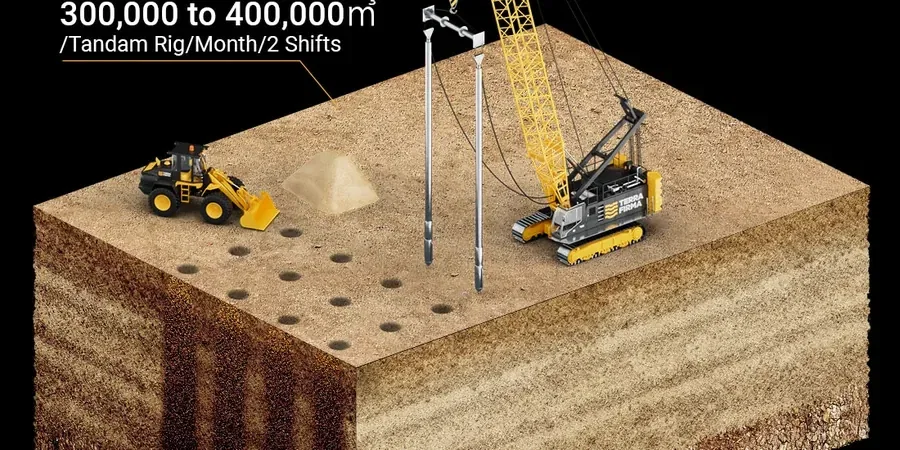
The two predominant techniques are vibrocompaction for granular soils and stone columns for cohesive deposits. Vibrocompaction densifies loose sands through vibration, while stone columns create stiff, draining inclusions in soft clays. The choice depends on soil type, project loads, and groundwater conditions found across Wagga Wagga sites.