For structural engineers working on critical facilities and complex buildings in Wagga Wagga, base isolation seismic design demands more than just a standard dynamic analysis. Much of the city sits on the Riverina Plain’s alluvial deposits, where the Murrumbidgee River has laid down metres of silty clay and loose granular fill that directly influence the period shift an isolation system must achieve. Our laboratory team supports these projects by generating site-specific shear wave velocity profiles and dynamic soil properties needed for nonlinear time-history models, ensuring the isolation bearings and the subgrade are modelled together rather than as disconnected components. When the isolator vendor asks for Vs30 or modulus degradation curves, we offer test data from borehole samples taken right from the project footprint, not generic regional estimates. This is especially relevant where the seismic microzonation work already maps distinct impedance contrasts across the Wagga Wagga basin that can amplify short-period motion under certain source scenarios.
Base isolation design in Wagga Wagga succeeds or fails on the subgrade characterisation — the isolator can only perform as well as the soil beneath it permits.
Technical details of the service in Wagga Wagga
We also run index characterisation on every tube sample: grain size distribution, Atterberg limits, and moisture content, because small changes in fines percentage in the Wagga Wagga Formation silts can alter the liquefaction susceptibility beneath the isolation plane, particularly where the water table sits within three metres of the surface along the floodplain.
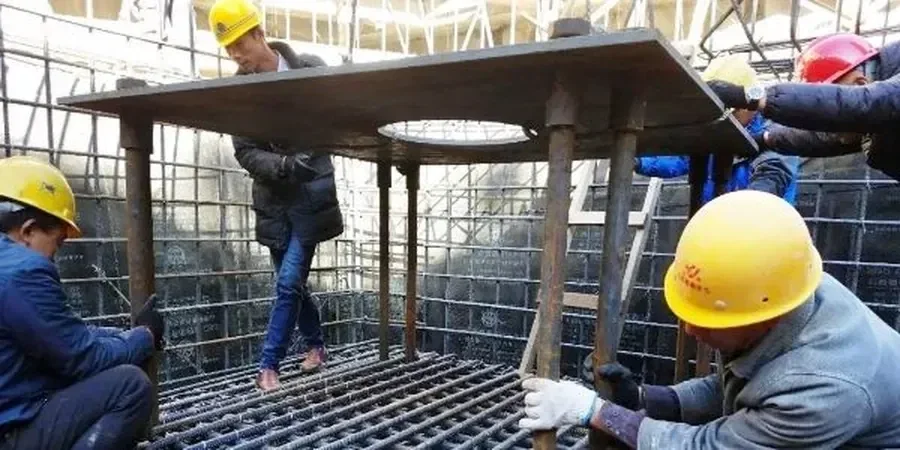
Critical ground factors in Wagga Wagga
The thick Quaternary alluvium that underlies much of central Wagga Wagga introduces a site-amplification effect that can double the short-period spectral acceleration seen at bedrock, and base isolation seismic design must account for this amplification explicitly rather than relying on a default Site Class D spectrum. A second concern is differential settlement across the isolator array: the Murrumbidgee paleochannels create abrupt lateral changes from stiff clay to looser sandy silt, and even a 5 mm differential movement can misalign lead-rubber bearings enough to alter their effective stiffness. On sloping sites near the Willans Hill ridgeline, the isolation plane must also resist a permanent downhill drift component, which increases the demand on the lateral restraint system and the underlying footing embedment. We quantify these risks through a combination of consolidation tests, downhole geophysics, and several boreholes per footprint — never a single data point — because the cost of retrofitting an isolation system that wasn’t tuned to the actual stratigraphy far exceeds the cost of a thorough investigation.
Our services
The laboratory and field investigation package we deliver for base isolation seismic design projects in Wagga Wagga addresses the three layers that govern performance: the isolation device itself, the pedestal-foundation interface, and the deeper soil column that transmits ground motion. Each module produces the parameters required for modelling without unnecessary testing that doesn’t feed the analysis.
Site-specific dynamic soil characterisation
Resonant column and cyclic triaxial tests on undisturbed tube samples from the isolator footprint, producing modulus reduction (G/Gmax) and damping curves that replace generic literature curves in the structural model.
Downhole Vs and Vs30 profiling
Crosshole or downhole seismic testing at the borehole array to assign a defensible AS 1170.4 site class, plus Vs profiles for 1D equivalent-linear site response analysis in DEEPSOIL or SHAKE.
Foundation bearing capacity and settlement analysis under cyclic load
Drained and undrained triaxial suites, combined with oedometer consolidation data, to confirm that the isolator pedestal foundations remain within tolerable settlement and tilt limits across the design life.
Seismic hazard and spectral matching review
Collaborative review of the probabilistic seismic hazard assessment and selection of spectrum-compatible ground motion records, ensuring the input motions reflect the Wagga Wagga basin response rather than rock-outcrop spectra alone.
Top questions
What does a base isolation design investigation include for a Wagga Wagga site?
A complete investigation typically covers mud-rotary or hollow-stem auger boreholes to at least 30 m depth, SPTs every 1.5 m, undisturbed tube sampling in cohesive layers, downhole seismic or MASW for Vs30, and a laboratory programme that includes index tests, consolidation, and dynamic testing such as resonant column or cyclic triaxial. The output is a geotechnical interpretive report with site class, strain-compatible soil properties, and foundation recommendations specific to the isolator layout.
How much does a base isolation seismic design investigation cost in Wagga Wagga?
For a typical commercial building footprint in Wagga Wagga, the combined field investigation and laboratory testing programme generally falls between AU$6,870 and AU$13,680, depending on the number of boreholes, the depth to refusal, and the size of the dynamic testing suite required by the structural engineer.
Which AS 1170.4 site class applies to most Wagga Wagga CBD sites?
Many CBD sites on the alluvial flats classify as Site Class D (deep soil) or occasionally Site Class C, but the classification must be confirmed by measured Vs30 rather than assumed. We have encountered profiles where a thin stiff crust over softer clay produces a site period that differs substantially from the code default, and that difference directly affects the isolation system’s target period.
Do you test the soil directly under the isolator pedestals?
Yes. We target undisturbed samples and SPTs within the stress bulb of each pedestal group. Consolidation and triaxial tests are run at confining pressures that replicate the pedestal bearing pressure plus seismic overturning increments, so the modulus and damping values used in the isolation model reflect the loaded condition, not the free-field.
How long does the laboratory testing phase take?
Index and consolidation tests are typically reported within 10–12 business days after sampling. Dynamic tests such as resonant column or cyclic triaxial require additional curing, saturation, and staged loading and are usually completed within four to five weeks, depending on the strain levels and number of specimens requested.