Wagga Wagga’s expansion from a river crossing on the Murrumbidgee into the largest inland city in New South Wales has progressively pushed development onto the alluvial flats and gentle slopes that ring the floodplain. These older Quaternary sediments—layered silts, clays, and sandy lenses deposited by ancestral channels—can vary sharply over short distances, which means a fill specification that worked on one side of the site may fail twenty metres away. Any controlled fill placed for a slab, pavement subgrade, or embankment in this landscape needs verification that goes beyond visual observation, and that is where the Proctor compaction test provides the laboratory reference curve that our field density test then compares against. The sand cone method, run in strict accordance with AS 1289.5.4.1, gives us a direct volume-and-mass measurement on freshly compacted lifts, so the contractor knows immediately whether the roller pattern is achieving the specified relative compaction before the next layer goes down.
A single failed density test on a lift that gets buried under a metre of fill can turn a compliant pavement into a maintenance liability within two seasons.
Technical details of the service in Wagga Wagga
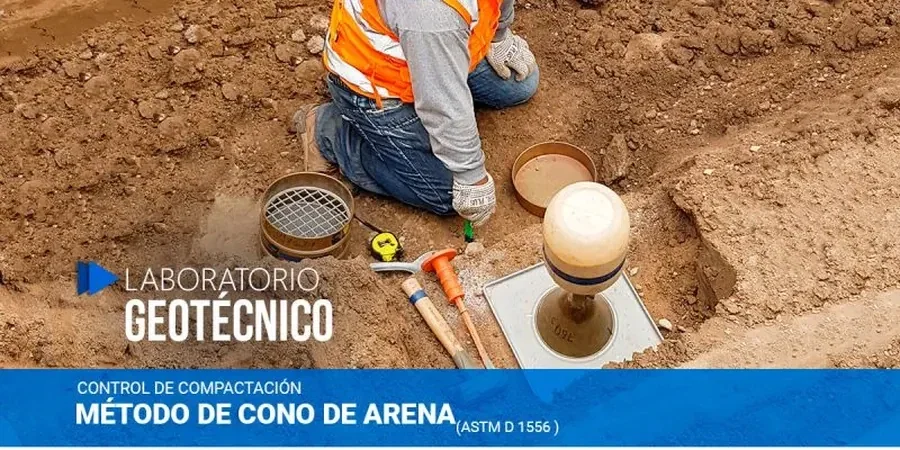
Field demonstration
Critical ground factors in Wagga Wagga
The Riverina climate loads the dice against earthwork contractors in two opposing ways: a prolonged dry spell during an El Niño cycle can strip moisture from stockpiled fill so thoroughly that achieving compaction above 95% modified requires water trucks running almost continuously, while a sudden trough pulling tropical moisture south from Queensland can deliver 50 mm of rain overnight, turning an exposed subgrade into unworkable mud. Beyond weather, the biggest contractual risk we see on Wagga Wagga jobs is failing to demonstrate compliance with the specified relative compaction before the independent geotechnical engineer signs off. A non-conformance report on a buried lift means re-excavation, re-compaction, and a delay that ripples through the programme, whereas a timely sand cone test—conducted within an hour of the last roller pass—keeps the earthworks moving with a verifiable paper trail that satisfies council and RMS requirements.
Our services
Our Wagga Wagga laboratory supports the sand cone density test with the full suite of complementary activities required under a typical Inspection and Test Plan (ITP). The two packages below are the ones most commonly bundled with field compaction work in the Riverina.
Compaction control package for residential slabs
Combines the sand cone field density test with modified Proctor laboratory compaction (AS 1289.5.5.1) and moisture content determination. We attend the site during fill placement, test each lift before the next is placed, and issue a Level 1 compaction report within 24 hours so the certifier can sign off the slab preparation without delay.
Road and pavement subgrade verification
Covers sand cone testing on the prepared subgrade and each layer of select fill or DGB20 road base. Includes laboratory reference density, particle size distribution, and Atterberg limits on the imported material to confirm compliance with council or RMS specification before the prime coat is applied.
Top questions
What does a field density test cost in Wagga Wagga?
A single sand cone test on a residential or small commercial site in Wagga Wagga typically runs between AU$150 and AU$200, which includes the technician’s time, daily calibration of the sand cone apparatus, and the immediate moisture content determination back at the lab.
How long do I have to wait before the next lift can be placed after a test?
The sand cone test itself takes about 15 minutes on site, and we can often give a verbal pass/fail indication immediately after weighing the excavated material. The formal report with the dry density ratio and moisture content is usually issued the same day, so if the lift passes, the next layer can go down within hours.
Why can’t you just use a nuclear gauge instead of the sand cone method?
Nuclear gauges are faster but require a site-specific calibration against the sand cone method to be accepted under AS 3798, and even then many council and RMS specifications mandate a minimum number of sand cone tests as the referee method. On fills containing variable aggregate or slag, the sand cone also avoids the chemical interference that can skew nuclear readings.
What happens if my fill fails the density test?
If a lift falls below the specified relative compaction, we mark the test location and the supervisor typically orders an extra roller pass or scarifies, reconditions the moisture, and re-compacts before we return to retest. Common causes we see on Riverina sites include moisture well above or below the optimum, an incorrect roller type for the material, or the lift thickness exceeding what the compactive effort can reach.