In-situ testing forms the backbone of geotechnical site investigation in Wagga Wagga, providing direct measurements of soil and rock properties in their natural, undisturbed state. Unlike laboratory tests that rely on extracted samples, in-situ methods capture the true behaviour of the ground under existing stress conditions, moisture regimes, and structural fabric. This category encompasses field density assessments, strength profiling, permeability evaluations, and deformation measurements conducted on site. For a region like Wagga Wagga, where soil conditions can shift dramatically across relatively short distances, the reliability of in-situ data is non-negotiable for safe and economical design.
Wagga Wagga sits on the floodplains of the Murrumbidgee River, underlain by a complex sequence of Quaternary alluvium, colluvium, and deeply weathered Palaeozoic bedrock. The alluvial deposits range from clean sands and gravels in paleochannels to highly reactive silty clays across the broader plains. These clay-rich soils are prone to significant shrink-swell movements with seasonal moisture changes, a characteristic that heavily influences foundation performance. In-situ testing becomes essential here to assess not just bearing capacity but also the reactivity of the soil profile, something that disturbed laboratory samples often fail to represent accurately. The presence of dispersive clays and potential for localised soft spots further elevates the need for thorough field investigation.
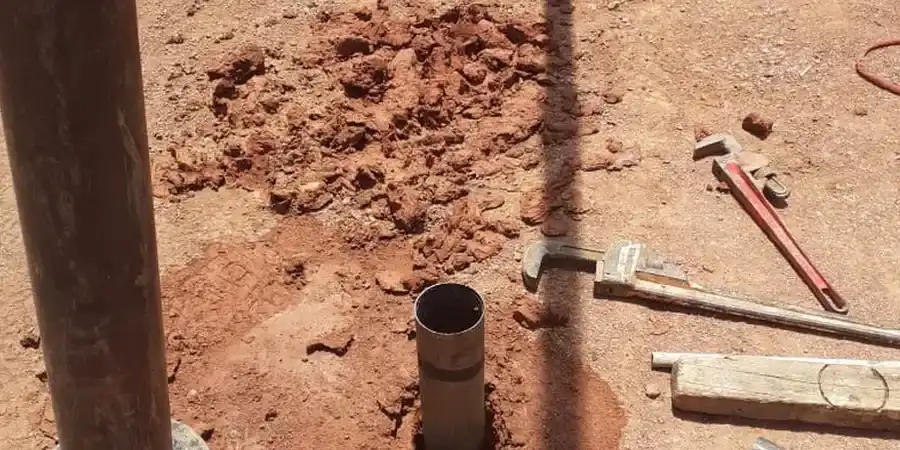
All in-situ testing in Australia must comply with the relevant Australian Standards, which are rigorously applied on Wagga Wagga projects. The primary framework is AS 1726 for geotechnical site investigations, which specifies how field tests should be conducted, reported, and interpreted. For density testing specifically, AS 1289.5.3.1 governs the field density test (sand cone method), a widely used technique for compaction control in earthworks. Other critical standards include AS 1289.6.3.2 for the standard penetration test (SPT) and AS 1289.6.6.1 for cone penetration testing. Adherence to these standards ensures that results are legally defensible and accepted by local councils and regulatory bodies for development approvals.
The types of projects requiring comprehensive in-situ testing in Wagga Wagga are diverse. Residential subdivisions on the city's expanding fringes demand reactivity assessments and compaction verification through methods like the sand cone density test. Commercial and industrial developments in areas like Bomen rely on deep borehole testing to characterise bearing strata for heavy foundations. Infrastructure projects, including the ongoing upgrades to the Sturt and Olympic Highways, require rigorous pavement subgrade evaluation. Even smaller structures like retaining walls and stormwater basins benefit from targeted in-situ investigation to mitigate risks associated with the region's variable ground conditions.
Available services
Questions and answers
Why is in-situ testing preferred over laboratory testing for certain geotechnical parameters?
In-situ testing measures soil properties under existing stress, moisture, and structural conditions without the disturbance caused by sampling, transport, and extrusion. This is critical in Wagga Wagga for assessing sensitive clays or loose sands whose fabric is easily destroyed. Field tests like the cone penetration test offer a continuous profile of strength, capturing thin weak layers that might be missed in a borehole log, leading to a more representative ground model for design.
What are the most common in-situ tests used for residential development in Wagga Wagga?
For residential projects, the most common in-situ tests include borehole logging with standard penetration testing (SPT) to assess bearing capacity and soil reactivity, and field density testing using the nuclear gauge or sand cone method for compaction control of building pads and fill. Shear vane tests are also frequently used in soft alluvial clays to determine undrained shear strength for footing and slab design in accordance with AS 2870.
How does the local geology of Wagga Wagga influence the choice of in-situ testing methods?
The Murrumbidgee River alluvium creates highly variable profiles with interbedded clays, silts, and sands. This demands a combination of continuous profiling methods like CPT to identify layer boundaries and discrete tests like SPTs for sampling. The expansive nature of the regional clays necessitates deep boreholes to assess moisture changes with depth, while the presence of gravel lenses in paleochannels may require heavy dynamic penetrometers to penetrate and characterise denser materials.
Which Australian Standards govern in-situ geotechnical testing for a project in Wagga Wagga?
The overarching standard is AS 1726, which provides the framework for geotechnical site investigations. Specific test methods are detailed in the AS 1289 series, including AS 1289.5.3.1 for the sand cone density method, AS 1289.6.3.2 for the standard penetration test (SPT), and AS 1289.6.6.1 for static cone penetration testing. Compliance with these standards is mandatory for regulatory approvals and ensures test results are valid and comparable across different practitioners.