In Wagga Wagga we often see rigid pavements that fail within five years because the subgrade wasn't properly characterised before the concrete went down. The Murrumbidgee River corridor created a patchwork of alluvial clays, silts and sands across the city, and a pavement section that works well in Estella can perform poorly in Glenfield Park. Our team runs a NATA-accredited laboratory on Morrow Street where we test subgrade strength, assess moisture sensitivity, and model joint behaviour under the thermal cycles typical of the Riverina. We don't guess at layer thicknesses. We derive them from field data. When the subgrade is marginal, we also pull in CBR testing for road pavements to cross-check the stiffness values before finalising the concrete slab design.
A rigid pavement is only as good as the subgrade it sits on. We prove the ground before the concrete is poured.
Technical details of the service in Wagga Wagga
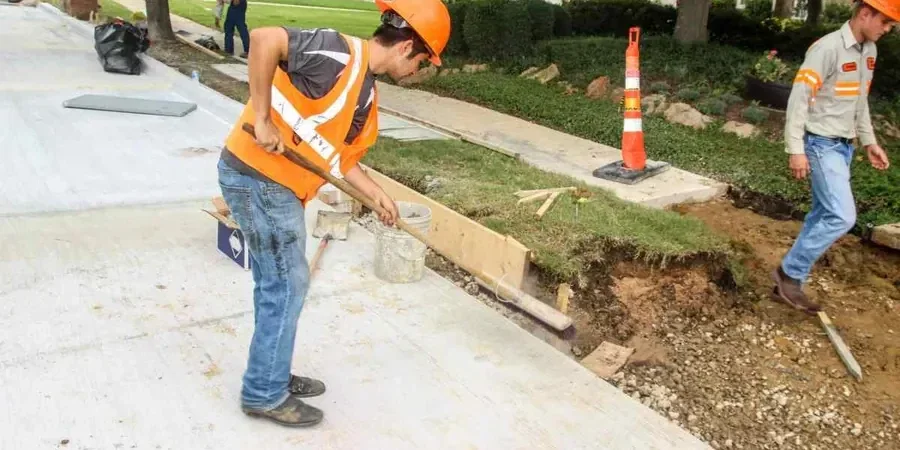
Critical ground factors in Wagga Wagga
The most common mistake we see in Wagga Wagga is contractors pouring a rigid pavement directly onto a levelled natural surface without any subgrade investigation. The ground looks firm in summer when the clay is dry and cracked, but six months later after winter rain the same clay has softened to a CBR below 2%. The slab develops corner breaks, the joints spall, and the owner is left with a repair bill that exceeds the original construction cost. Another frequent issue is inadequate joint design for the daily temperature range: Wagga Wagga can swing from 4°C overnight to 42°C in summer, generating thermal stresses that buckle poorly detailed slabs. Our designs explicitly account for this thermal gradient using local Bureau of Meteorology data, and we specify dowel diameters and joint sealing materials accordingly.
Our services
Our rigid pavement design service in Wagga Wagga covers the full project lifecycle, from initial site investigation through to construction support. The three core components are outlined below.
Subgrade Investigation and CBR Testing
Field sampling and laboratory soaked CBR determination per AS 1289 at the design moisture condition. We map subgrade variability across the site footprint and offer design CBR values for each pavement zone.
Concrete Pavement Structural Design
Slab thickness design using Austroads mechanistic procedures, including joint layout, dowel sizing, tie bar specification and fatigue analysis for the design traffic spectrum. We produce construction-ready drawings and specifications.
Construction QA and Field Density Verification
On-site compaction control using nuclear gauge and sand cone methods, concrete cylinder testing for flexural strength, and dowel alignment verification before and during the pour.
Top questions
What subgrade CBR value is required for a rigid pavement in Wagga Wagga?
We target a minimum soaked CBR of 5% for plain concrete pavements under residential and light commercial loading. For industrial pavements handling forklift traffic, we typically require 8% or higher. If the natural subgrade in Wagga Wagga tests below these values, we design a stabilised subbase layer using cement or lime treatment to achieve the target stiffness before placing the concrete.
How much does a rigid pavement design cost for a typical Wagga Wagga project?
For a standard rigid pavement design including subgrade investigation, laboratory testing and the structural design report, costs in Wagga Wagga typically range from AU$2,660 for smaller residential driveways up to AU$9,880 for larger industrial or commercial projects. The final figure depends on the site area, number of test pits required and the design traffic loading.
How do expansive clays in Wagga Wagga affect rigid pavement performance?
Expansive clays in Wagga Wagga, particularly in the northern suburbs around Estella and Gobbagombalin, undergo significant volume changes with seasonal moisture variation. This differential movement induces warping and curling stresses in the concrete slab that can exceed the flexural capacity if not accounted for in the design. We mitigate this by specifying thicker slabs, closer joint spacing, a moisture-stable subbase layer, and sometimes geotextile separation to prevent fines migration into the pavement structure.