With Wagga Wagga sitting at roughly 180 metres elevation along the Murrumbidgee River floodplain, the transition from flat alluvial ground to steeper colluvial slopes around Willans Hill and Pomingalarna creates some tricky geotechnical puzzles. More than 68,000 people live across the city’s expanding suburbs, and as new subdivisions push into the eastern and southern margins, cut-and-fill earthworks become unavoidable. A proper slope stability analysis isn’t just a regulatory checkbox—it’s what stops a 1-in-100-year storm from turning a site cut into a costly failure. Our lab team runs drained and undrained shear strength tests on samples pulled straight from the actual formation level, and we feed those parameters into limit-equilibrium models that account for Wagga’s dry spells followed by sudden heavy downpours. When the geology shifts from the Shepparton Formation clays into weathered granite residual soil near the rock outcrops, we often pair the analysis with test pits to map the colluvium depth, and with attenberg limits to confirm the clay fraction that controls pore pressure response during wetting cycles.
The highest-risk slopes in Wagga Wagga aren’t the steepest—they’re the ones where a sandy layer within the Shepparton clay lets water build up behind the face after a week of summer storms.
Technical details of the service in Wagga Wagga
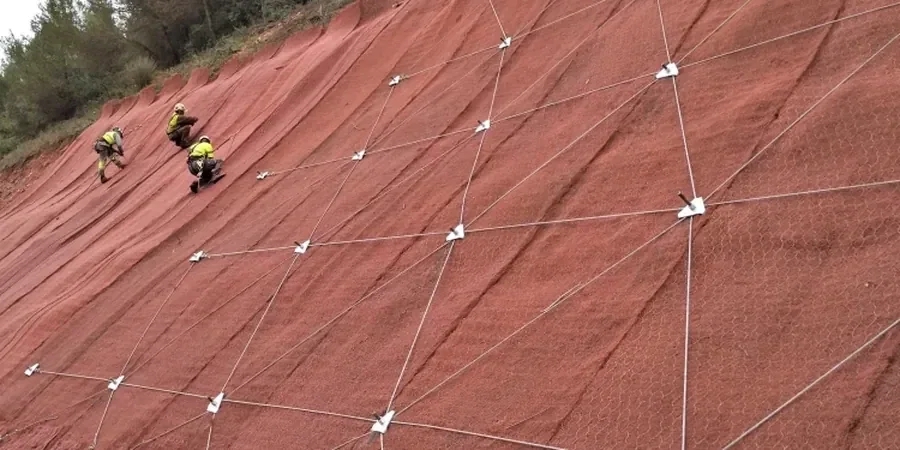
Critical ground factors in Wagga Wagga
We’ve seen earthmoving contractors in Wagga cut a 4-metre-high batter through red clay, see it stand up fine for six dry months, and assume it’s stable. Then a La Niña summer delivers 80 millimetres in a weekend, the negative pore pressure at the face vanishes, and a wedge drops onto the building platform. The fix costs more than the original cut. Another recurring mistake is designing slope angles based on regional knowledge from the Melbourne basalt plains without accounting for the lower cohesion of Wagga’s transported colluvial soils—the material here slakes quickly when exposed in a cutting and loses suction at the face within a single wetting cycle. A stability analysis that only considers a fully-drained scenario misses the critical transient condition where the factor of safety dips below 1.0 for a few hours during peak infiltration. We model that exact condition using a two-stage approach: a SEEP/W unsaturated flow analysis to get the pore pressure profile at the design storm intensity, then a SLOPE/W run with those pressures mapped onto the failure surface. The output tells you whether you need subsoil drains behind the batter, a flatter slope angle, or a retaining wall at the toe to catch the active wedge before it moves.
Our services
Every slope in the Wagga Wagga region sits somewhere on a spectrum between “benign” and “needs active management.” The three service tiers below cover the range from a desktop screening to a fully instrumented design analysis.
Feasibility-Level Desktop Assessment
For greenfield subdivisions and rural residential lots before DA submission. We combine published geological mapping of the Wagga Wagga 1:100,000 sheet with site walkover observations and a limited hand-auger program to produce a preliminary slope stability risk rating across the site. Output is a colour-coded plan showing zones where batter angles steeper than 2H:1V require further investigation, plus a letter report suitable for council pre-meeting submission.
Detailed Design Analysis with Instrumentation
For permanent cuttings deeper than 3 metres and embankments supporting road pavements. Includes borehole drilling to refusal, undisturbed sampling at 1.5-metre intervals, multi-stage direct shear and CIU triaxial, installation of 3–5 vibrating-wire piezometers across the slope profile, and a full limit-equilibrium model with both static and seismic load cases. Delivered as a signed geotechnical design report with recommended batter angles, drainage details, and construction sequencing notes.
Post-Construction Monitoring & Remedial Review
For existing slopes showing tension cracks, toe bulging, or seepage staining. We survey the crack pattern with RTK GPS, install inclinometer casing to track shear zone movement over a wet season, and back-analyse the failure geometry to determine the operative shear strength at the time of movement. The output is a remediation options report: sub-horizontal drains, toe buttress, soil nailing, or anchors through the active wedge into competent rock, with costed quantities for tender.
Top questions
What’s the ballpark cost for a slope stability analysis on a residential cut in Wagga Wagga?
For a single residential batter up to 4 metres high, expect between AU$1,830 and AU$3,500 depending on access, number of boreholes, and whether we’re running direct shear or triaxial. A larger subdivision with multiple cut faces, piezometer installation, and a full design report typically falls in the AU$4,800–AU$6,900 range. The cost is driven mainly by the drilling metres and the number of shear strength tests required to cover the variability across the site.
How deep do you drill for a slope stability investigation in Wagga’s colluvial soils?
We drill to at least 1.5 times the slope height below the toe, or until we hit competent bedrock, whichever comes first. In the colluvium around Wagga, that usually means 6 to 10 metres, though sites near the granite outcrops south of Lake Albert sometimes hit refusal at 3 metres and we switch to a rock socket with a diamond bit to confirm there’s no deeper weathered zone.
What’s the minimum factor of safety required by council for a permanent cut?
Wagga Wagga City Council generally follows AS 4678, which calls for a factor of safety of 1.5 for permanent static conditions and 1.1 for the seismic load case under AS 1170.4. Some engineers round up to 1.5 for all cases as a conservative practice. If the slope supports a public road or a dwelling, the council’s development engineer may ask for the full calculation package, not just the FoS summary.
Do you need to monitor groundwater for a slope stability analysis, or can you estimate it?
You can estimate it for a feasibility study using a conservative phreatic surface assumption (say, at one-third the slope height from the toe), but for detailed design, we strongly recommend installing at least two piezometers—one at the crest and one mid-slope. Wagga’s colluvial clays have cracks and root holes that create preferential flow paths, and a piezometer array picks up perched water that an assumed water table completely misses.