The alluvial plains and ancient river terraces around Wagga Wagga create a deceptive subsurface. A site that looks uniform from the surface often conceals lenses of dense gravel, pockets of soft clay from old billabongs, or variably cemented silts tied to the Shepparton Formation. When foundation loads must transfer safely through these deposits, the Standard Penetration Test provides the repeatable, depth-specific data that engineers in the Riverina trust. Our team runs SPT rigs across Wagga Wagga’s commercial corridors and rural subdivisions, delivering N-values and disturbed samples that feed directly into bearing capacity calculations, settlement estimates, and liquefaction screening under AS 1726. We pair SPT data with CPT testing where continuous stratigraphic profiles are needed, and we use test pits to calibrate blow counts against visible soil fabric in the upper metres.
An SPT N-value without correction for rod length and hammer energy is just a number—calibrated data is what keeps Wagga Wagga foundations safe.
Technical details of the service in Wagga Wagga
Critical ground factors in Wagga Wagga
A five-storey mixed-use development proposed on Baylis Street encountered SPT N-values swinging from 4 to 32 within a single borehole over a depth of two metres. The scatter traced back to alternating clay and sandy silt layers deposited during Murrumbidgee flood cycles. Relying on an averaged N-value would have masked the soft seams and produced an unconservative settlement prediction. The design team used the raw interval data to trigger a supplementary liquefaction assessment for the saturated silts and to place footings below the zone of maximum seasonal moisture fluctuation. In Wagga Wagga, where shrink-swell clay and variable alluvium coexist, skipping a properly spaced SPT programme risks differential movement that shows up within three to five years. The cost of a single borehole with SPT is negligible compared to underpinning later.
Our services
Our Wagga Wagga geotechnical group runs SPT operations as part of a broader site characterisation package. Each service below supports a specific design question—from bearing capacity to slope stability.
SPT drilling and N-value logging
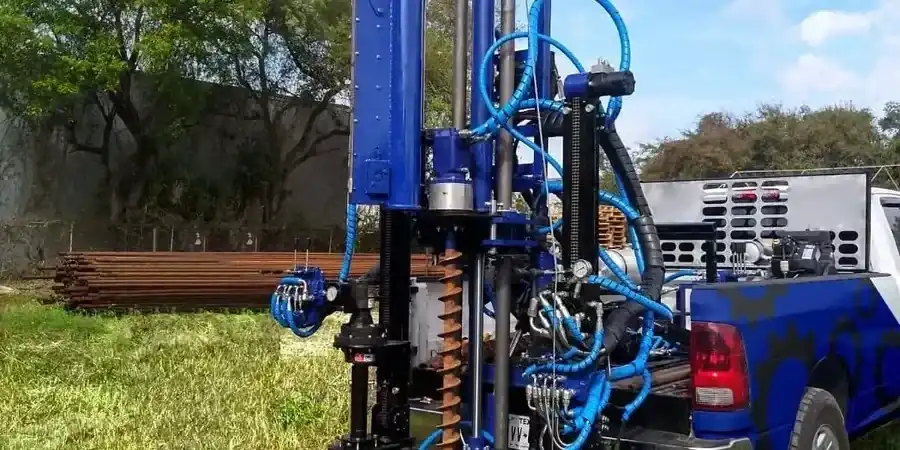
Truck-mounted and track-mounted rigs operating across Wagga Wagga’s CBD and rural lots. Every test includes hammer energy calibration, recovery measurement, and AS 1726-compliant field logs.
Foundation bearing capacity reports
Direct translation of corrected SPT N60 values into allowable bearing pressures using Meyerhof, Bowles, and Terzaghi-Peck methods suited to Riverina soil profiles.
Liquefaction screening (NCEER/Youd-Idriss)
SPT-based liquefaction potential analysis for saturated granular layers. Applied regularly on Murrumbidgee floodplain sites where seismic demand governs.
Combined SPT and laboratory testing
Disturbed samples from SPT runs are immediately dispatched for particle-size distribution, Atterberg limits, and moisture content to calibrate field classifications.
Top questions
How much does an SPT borehole cost in Wagga Wagga?
A single SPT borehole to 10–15 metres depth in Wagga Wagga typically falls between AU$800 and AU$1,180. The final figure depends on access constraints, rig type (truck vs track-mounted), and the number of test intervals requested. Multi-borehole programmes on larger sites attract better per-metre rates.
What depth do you test with SPT for a standard residential slab in Wagga Wagga?
For a Class M or H site on Wagga Wagga’s reactive clays, we usually advance SPT boreholes to at least 3.0–4.5 metres, or until a consistent refusal stratum is confirmed. The depth must capture the active moisture zone plus the anticipated stress influence of the footing, so the engineer can check both bearing capacity and potential shrink-swell movement.
Do you correct SPT N-values for overburden pressure and hammer energy?
Yes, every SPT report from our Wagga Wagga team includes N60 values corrected for hammer energy ratio, rod length, borehole diameter, and overburden pressure following AS 1726 guidance and the international practice outlined by Seed and Idriss. We present both raw N and corrected N60 so the design engineer has full traceability.